One set of numbers: an executive briefing for a small contractor
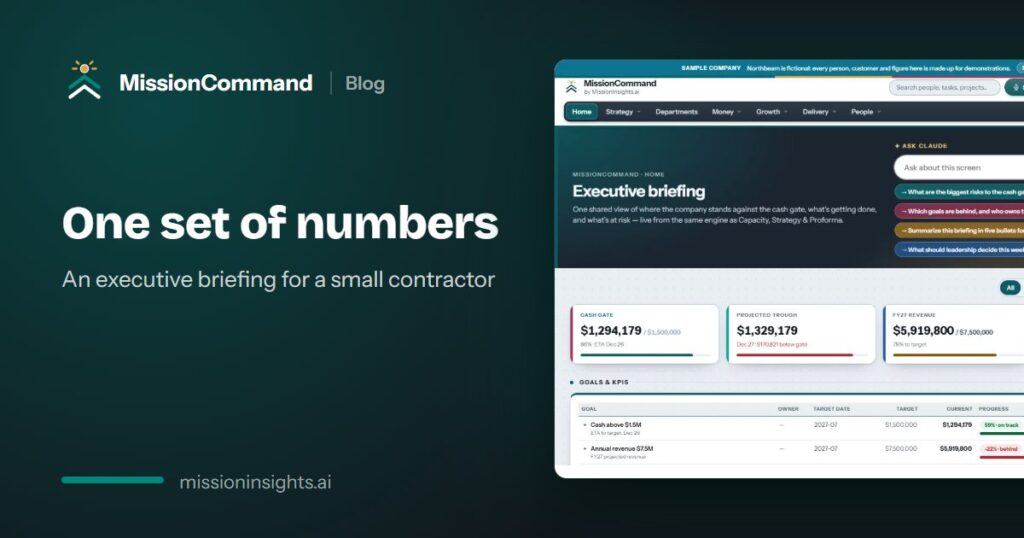
A CEO of a small government contractor is rarely in the daily work, so problems arrive late. A contract issue reaches the top when it is already large. And when the CEO asks a simple question, the answer is someone’s spreadsheet: cash with finance, staffing with operations, the pipeline with business development. One picture takes three emails and a meeting.
What belongs on the first screen
A useful morning briefing answers four questions before the first meeting:
- Where is cash against the target?
- Where is revenue against the plan?
- What does the weighted pipeline look like?
- Which company goals are on track, at risk or behind?
Each one should be measured against a target you set, not shown as a raw number. A balance means little until you know what it should be.
One set of numbers, not a slide deck
The briefing only works if nobody builds it. When each figure is read from the same data as the rest of the business, there is no version to reconcile and no slide to update. The CEO, the COO and the CFO can look at the same page and bring forward the cards that matter to each of them.
Goals that measure themselves
A goal should know its own status. If it reads a live figure and compares it to the pace needed to reach the date, it can say on track, at risk or behind without anyone filling in a status column. Link a goal to the pursuits and proposals that will move it, and the conversation shifts from “how are we doing” to “what are we doing about it.”
Decisions with owners and a clock
Many problems are not missing information. They are decisions that went to a leader and stayed there. Give every decision an owner and count the days it has been open. Do the same for actions from standing meetings. Two weeks later, nobody has to remember who owns it.
A cash target with a date
Set the cash you need and the date you need it by, and project month by month when you will cross it. Then test it: what if a deal in negotiation closes, or an award slips a quarter? Watching the date move is a faster way to make a decision than reading a forecast.
How MissionCommand handles it
MissionCommand opens on an executive briefing with cash, revenue, weighted pipeline and every company goal, each measured against your target, with CEO, COO and CFO lenses. Nothing on the page is typed in for the briefing; goal values are recalculated each time it opens. Roles are enforced on the server, so the finance pages stay with administrators and executives.
See it on the MissionCommand page for CEOs, or explore the free sample company.